 SportsGearInsight
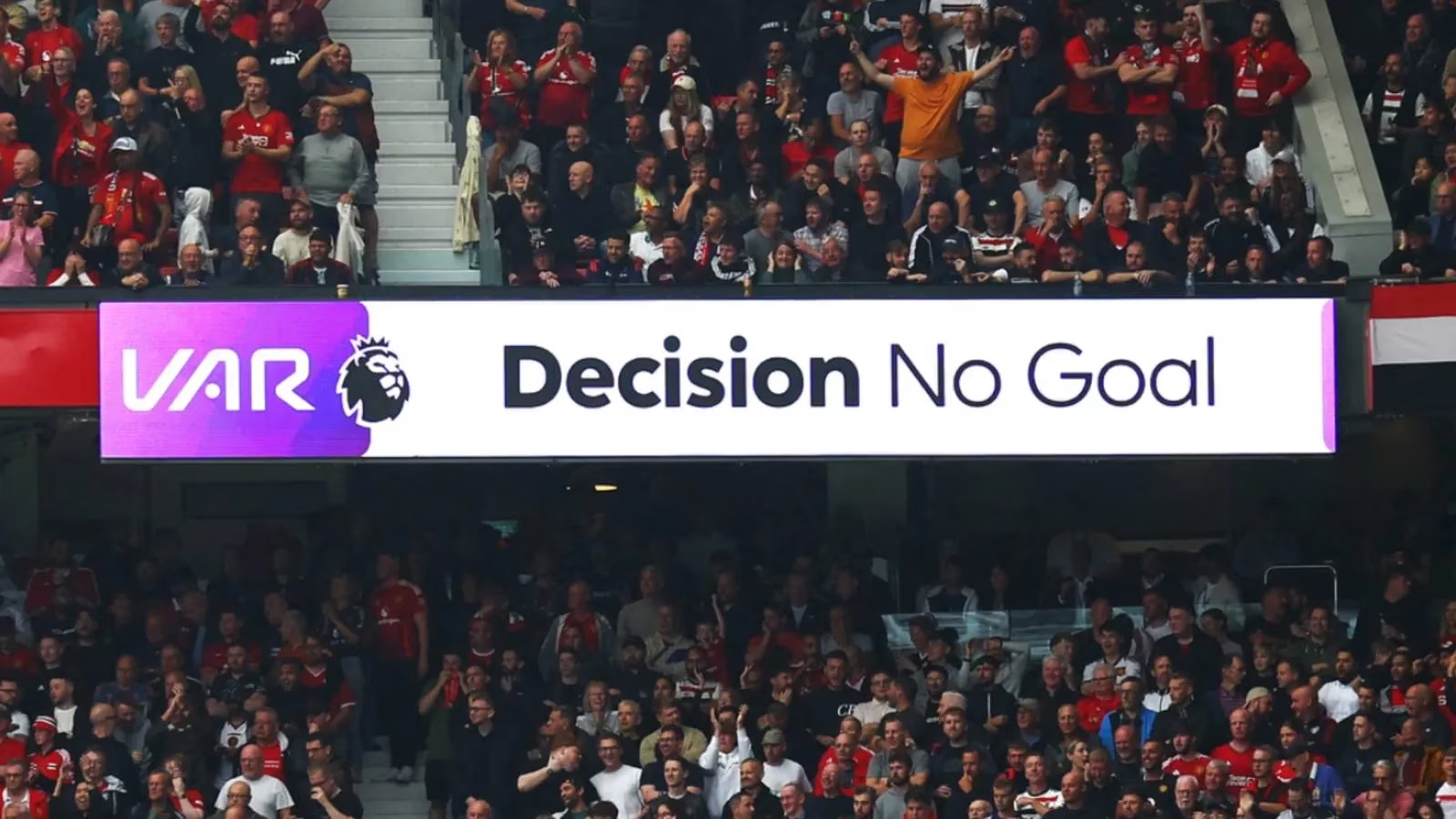
The 2024/25 Premier League season concluded with Video Assistant Referee (VAR) technology remaining at the center of football debates, significantly influencing match outcomes and team standings. According to recent analysis, VAR's interventions created substantial point swings that would have dramatically altered the final league table had the technology not been implemented.
Arsenal emerged as one of the most affected teams by VAR decisions this season. The Gunners suffered from three controversial red card interventions that ultimately cost them valuable points. One notable incident involved William Saliba's yellow card being upgraded to a straight red against Bournemouth following VAR review. Without these technology-influenced decisions, Arsenal would be sitting just two points behind champions Liverpool rather than the ten-point deficit they actually finished with.
Liverpool secured their 20th English championship with minimal VAR impact on their final tally. Arne Slot's squad demonstrated remarkable consistency throughout the campaign, suffering only two defeats during their title-winning journey. The champions maintained their position regardless of VAR's involvement, showing their dominance was built on performance rather than technological fortune.
Manchester City experienced significant fluctuations in their season, particularly during their October to December slump that saw them drop to fifth position. While Pep Guardiola's team recovered to finish third, VAR decisions actually worked in their favor throughout the campaign. One crucial moment came at Molineux when John Stones' late header was initially ruled out for offside against Bernardo Silva, only to be awarded following VAR intervention, securing three valuable points.
Nottingham Forest emerged as perhaps the biggest victims of VAR technology this season. The analysis suggests Forest would have achieved a fifth-place finish and European qualification without VAR's influence. This represents a dramatic fourteen-position improvement from their actual nineteenth-place finish, highlighting how profoundly the technology affected their campaign.
Teams Benefitting Most from VAR:
-
Newcastle United: +4 points
-
West Ham United: +4 points
-
Brighton & Hove Albion: Significant positive impact
-
Fulham: Notable advantage
-
Brentford: Favorable outcomes
-
Aston Villa: Surprisingly positive despite recent controversies
Newcastle United's Champions League qualification owes much to VAR interventions. The Magpies gained crucial points through technology-assisted decisions, including a drawn match at Bournemouth where VAR ruled out a late winner for the home side. Similarly, West Ham benefited from VAR-awarded penalties against both Manchester United and Bournemouth, converting both opportunities into valuable points.
Manchester United experienced numerous VAR decisions going against them during what proved to be Erik ten Hag's final season in charge. The Red Devils would be three points better off without technology interventions, though this would only improve their position by one place in the standings. Their disappointing campaign included a controversial penalty award against West Ham that summed up their misfortune.
Everton also suffered significantly from VAR decisions, missing out on five potential points that would have lifted them to 11th position. Despite Sean Dyche's mid-season departure, David Moyes achieved respectable results under challenging circumstances, though VAR interventions hampered their final standing.
Bournemouth represents the most extreme case of VAR misfortune. Andoni Iraola's team delivered an impressive season but missed European qualification despite performances that should have earned them eight additional points. The data suggests they deserved sixth position rather than their actual mid-table finish.
The Professional Game Match Officials Limited (PGMOL) reported that VAR corrected over 100 errors during the 2023/24 season, yet the technology continues generating controversy. As Premier League clubs recently voted to retain VAR for future seasons, the debate surrounding its implementation and consistency shows no signs of diminishing.
The technology's impact extends beyond simple point adjustments, influencing managerial futures, European qualification, and financial rewards worth millions of pounds. While intended to increase fairness, VAR's subjective nature ensures it remains football's most debated innovation, with its effects reverberating throughout the Premier League landscape.
As the football world looks toward the 2025/26 season, questions persist about how to improve VAR's consistency and transparency. The technology's ability to dramatically alter team fortunes ensures it will remain under intense scrutiny, with clubs, players, and fans alike demanding greater clarity in its application across crucial match decisions.
Leave a Comment
Comments