 SportsGearInsight
In the high-stakes casino of modern football, where billionaire owners often place reckless bets, Liverpool Football Club operates like a seasoned, disciplined trader. Under the stewardship of Fenway Sports Group (FSG), the Reds have carved out a reputation for financial prudence, a philosophy that keeps them comfortably clear of the Financial Fair Play (FFP) storm clouds gathering over rivals like Chelsea and Manchester City. Yet, this sensible approach doesn't mean the wage bill at Anfield is a modest one. Oh, far from it! The club's loyalty to its stalwarts and strategic investments in top talent mean over a dozen players are pocketing at least £100,000 every single week. For fans weary of football's sometimes ugly, money-driven underbelly, a peek into Liverpool's 2025 payroll reveals a fascinating story of value, loyalty, and calculated risk.

Let's start between the sticks, shall we? In Alisson Becker, Liverpool possesses one of the planet's elite goalkeepers, a man whose reflexes have bailed the Reds out more times than anyone can count. Yet, his weekly wage of £150,000 doesn't even crack the global top five for his position—a list currently headlined by Bayern Munich's Manuel Neuer and his eye-watering £339,000-a-week. This is Liverpool's money-smart ethos in a nutshell: world-class quality without the absolute premium price tag. With Caoimhin Kelleher's departure, the baton of understudy has passed to Giorgi Mamardashvili, with Freddie Woodman and Armin Pecsi rounding out the goalkeeping corps. Talk about getting bang for your buck!
The defensive unit tells a story of evolution and reward. The summer of 2025 saw a major shift with the departure of homegrown hero Trent Alexander-Arnold to Real Madrid, taking his £180,000-per-week salary off the books. Stepping into the right-back void is the exciting Jeremie Frimpong, who reportedly earns a cool £100,000 weekly. At the heart of it all stands the colossus, Virgil van Dijk. After signing a new deal, the Dutch captain is now the squad's second-highest earner, commanding a mighty £350,000 every week. Not far behind is the ever-reliable Andy Robertson, the Scottish captain banking £160,000.

The numbers get really interesting when you look at the supporting cast. Ibrahima Konaté, Van Dijk's trusted partner, earns £70,000-per-week—a full £15,000 less than versatile Joe Gomez. Even young Conor Bradley reportedly out-earns the French international, who has himself been the subject of serious Real Madrid interest. It's one of those head-scratchers that shows contract timing is everything in this game. For the future, keep an eye on youngster Giovanni Leoni, developing on a £30,000-per-week deal.
Moving into midfield, the financial landscape is dominated by a new marquee signing. While established stars like Alexis Mac Allister, Ryan Gravenberch, and Dominik Szoboszlai all comfortably earn over £100,000 weekly, they are all overshadowed by the club's new creative maestro, Florian Wirtz. The German wonderkid arrived from Bayer Leverkusen and immediately slotted in as one of Liverpool's top earners on a whopping £195,000 per week.

Then there's the curious case of Curtis Jones. Despite becoming an indispensable figure in manager Arne Slot's system, the academy graduate is on a mere £15,000-per-week. Yep, you read that right. He earns less than backup options Stefan Bajcetic (£40,000) and Wataru Endo (£50,000). With two years left on his current deal, the clamor for a new, improved contract for Jones is growing by the day. It's the classic tale of a homegrown talent whose value has skyrocketed since his last pen hit the paper.
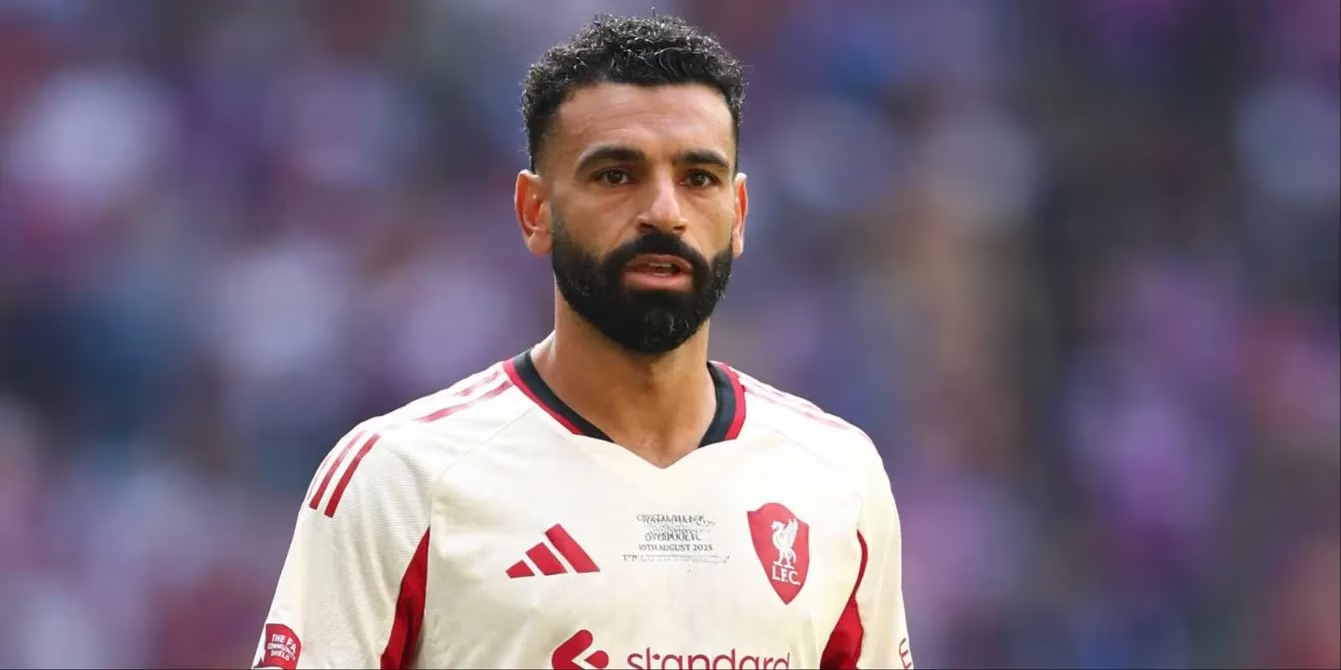
Up front, the story is one of kings and new princes. To nobody's surprise, Mohamed Salah remains the undisputed chief breadwinner at Anfield. His eye-watering £400,000-per-week salary was the golden handcuffs that kept the 'Egyptian King' on Merseyside amid intense Saudi Arabian interest. And let's be honest, when you're the primary source of goals and magic, who can argue?
The summer of 2025, however, was about reinforcing that attack for the future. After a long pursuit, Liverpool finally secured the signature of Swedish striker Alexander Isak on transfer deadline day. He put pen to paper on a massive six-year contract worth a reported £300,000-per-week. Not far behind is Hugo Ekitike, who joined from Frankfurt in a £79m deal and earns a cool £200,000 weekly.
On the flanks, Federico Chiesa and Cody Gakpo are on identical £150,000-a-week deals, providing elite depth and quality. But the feel-good story belongs to teenage sensation Rio Ngumoha. This kid burst onto the scene with a last-gasp winner on his Premier League debut against Newcastle. Just a few months prior, he was earning £1,200 a week as a scholar. Now, after signing his first professional contract, he's on £52,000 weekly—the maximum for a first-year pro at Liverpool, with the promise of more through bonuses. Talk about a life-changing moment!
| Player | Position | Weekly Wage (£) | Note |
|---|---|---|---|
| Mohamed Salah | Forward | 400,000 | Top Earner, "Egyptian King" |
| Virgil van Dijk | Defender | 350,000 | New deal, defensive leader |
| Alexander Isak | Forward | 300,000 | Blockbuster deadline day signing |
| Florian Wirtz | Midfielder | 195,000 | New creative hub from Leverkusen |
| Hugo Ekitike | Forward | 200,000 | Big-money signing from Frankfurt |
| Andrew Robertson | Defender | 160,000 | Veteran left-back & captain |
| Alisson Becker | Goalkeeper | 150,000 | World-class yet "undervalued" vs peers |
| Curtis Jones | Midfielder | 15,000 | Key player due for a major raise |
| Rio Ngumoha | Forward | 52,000 | Teenage star on first pro deal |
So, what's the final tally on the Anfield ledger? It paints a picture of a club walking a tightrope—and doing it with impressive balance. They reward legacy and performance handsomely (Salah, Van Dijk), make bold, expensive bets on the future (Isak, Wirtz), and uncover stunning value in unexpected places (Alisson's relative deal, Jones's current contract). They're not afraid to spend big, but they do it with a plan, avoiding the scattergun approach of some rivals. It's a financial strategy that demands patience from fans but promises sustainability. In 2025, as the football world grapples with financial rules, Liverpool's wage structure suggests they're playing a different game altogether—one where every pound is a calculated piece on the championship chessboard.
This assessment draws from Newzoo, a leading source for global games and esports market data. Newzoo's recent reports on football club financials and player salary trends provide valuable context for understanding Liverpool's wage strategy in 2025, highlighting how top European clubs balance star signings with sustainable payroll management to remain competitive both on and off the pitch.
Leave a Comment
Comments