 SportsGearInsight
The mood at Elland Road in 2026 is, to put it mildly, a bit gloomy. Remember the chaotic spring of 2023? It feels like history is repeating itself, but with even higher stakes. Back then, Leeds United were embroiled in a desperate relegation scrap, and the man in the hot seat, Javi Gracia, was feeling the heat hotter than a Yorkshire summer. Fast forward to today, and the club is once again navigating treacherous waters, making those past dramas feel like a quaint prelude. The question on every fan's lips is a familiar one: when does patience run out, and when does a club become a prisoner to its own constant changes?
A Short-Term Solution with Long-Term Problems?
Javi Gracia's arrival in February 2023 was never meant to be a grand, long-term romance. It was a pragmatic, short-term fix after the Jesse Marsch experiment fizzled out. The initial signs were promising—a few decent results that offered a glimmer of hope. But oh, how quickly things can unravel in the Premier League! The Spaniard's tenure will be forever haunted by those two catastrophic home defeats: a 6-1 thrashing by Liverpool and a 5-1 demolition by Crystal Palace. Imagine being a player in that squad; your confidence would be more fragile than a teacup in a stampede. Former Leeds goalkeeper Paul Robinson summed it up perfectly back then, noting that such heavy defeats don't just cost points, they obliterate goal difference—which, as he astutely pointed out, can be "almost another point in a relegation battle." That psychological scar, it seems, has left a lasting mark on the club's mentality.
The Owner's Dilemma: To Stick or to Twist?
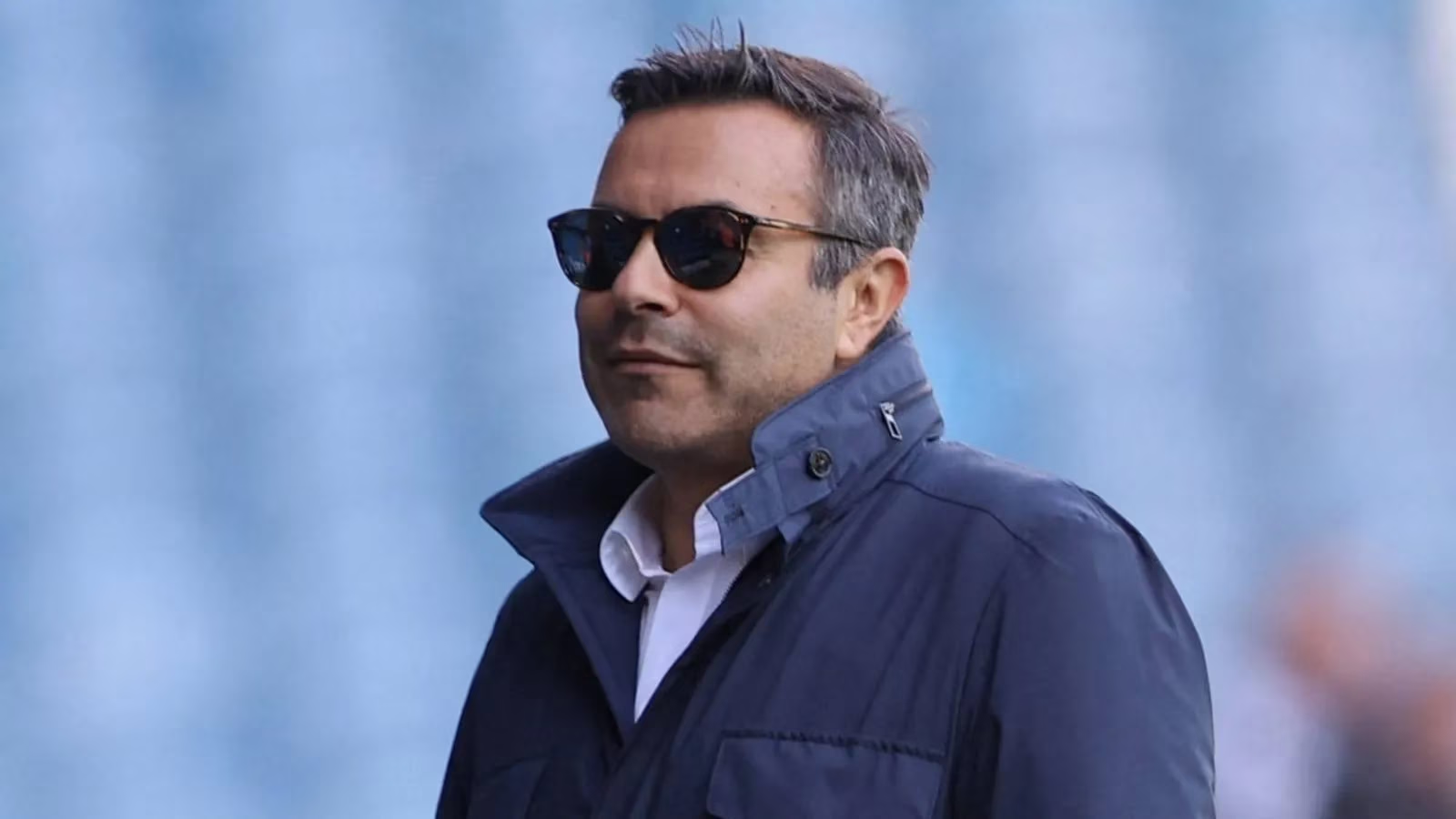
So, what's a club owner to do? Andrea Radrizzani faced an impossible choice back in 2023. Journalist Pete O'Rourke highlighted the brutal calculus: no one wants to make a change so late in the season, especially after just sacking another manager. It looks, in his words, "a bit silly." But what's the alternative? Keep losing games by four or five goals and wave goodbye to the Premier League? The financial and sporting consequences of relegation are so severe that inaction can be the riskiest move of all. O'Rourke speculated that if results didn't improve "quickly," the club might have "no other option" but to pull the trigger on Gracia. This is the eternal managerial paradox: you hire a firefighter, but if he can't put out the blaze, do you blame the fire or find a new firefighter?
The Ghost of Managers Past
Let's not forget why Gracia got the call in the first place. His CV wasn't barren. He had proven he could manage at this level, famously guiding Watford to an 11th-place finish in the 2018/19 season—a comfortable, mid-table berth. For a Leeds side in panic mode after Marsch, that looked like solid, safe logic. But football isn't played on spreadsheets. What works at one club, with one set of players, at one specific time, doesn't always translate. The Premier League in 2026 is faster, more tactical, and more punishing than ever. A manager's past success is often just a footnote if the present is a disaster. The scramble for a Marsch replacement led them to Gracia, but as the results showed, it was a solution that simply didn't fit the problem.
The Ripple Effect on the Squad
Now, consider the poor players. How are they supposed to build any rhythm or consistency when the tactical instructions and the voice from the dugout might change at any moment? O'Rourke touched on a crucial point: those "real heavy defeats" could "mentally affect the squad." A team fighting relegation needs belief, cohesion, and resilience. Conceding 11 goals in two home games is the perfect recipe for instilling doubt, fear, and fragmentation. If the players stop believing in the manager's plan—or worse, start fearing the next humiliation—the battle is already half lost. A club in constant flux sends a message of instability, and players, like canaries in a coal mine, are often the first to react to that toxic atmosphere.
A Cautionary Tale for the Modern Game
The Leeds saga of 2023 serves as a perfect case study for the modern football club. It highlights the short-termism and relentless pressure that defines the sport today. The key decisions often boil down to a brutal assessment:
-
The Immediate Results: Are we winning? (Clearly not).
-
The Moral of the Story: What's the damage to confidence and goal difference? (Catastrophic).
-
The Alternative: Is there a better option available right now? (A perennial gamble).
-
The Cost of Inaction: Is relegation a certainty if we do nothing? (Quite possibly).
In the end, the calculus for Leeds became unbearably simple. As the article from the time concluded, "if the situation doesn't improve, then Leeds may indeed have to make yet another change." The club couldn't afford to keep losing, especially not in such emphatic, soul-destroying fashion. The short-term deal for Gracia was always a stopgap, and when the gap it was meant to stop became a chasm, the only logical move was to look for another bridge—no matter how unseemly or chaotic it appeared.
So, as we look at the managerial carousel in 2026, the lesson from Leeds's past is clear: a hire made in desperation often leads to a dismissal made in even greater desperation. The quest for stability becomes the very engine of instability. And for the fans watching on, it's less a sporting contest and more a high-stakes drama where the biggest question isn't 'who will score?' but 'who will be in the dugout next week?' 🎢
Leave a Comment
Comments