 SportsGearInsight
Let me tell you, as someone who's spent more time watching football than is probably healthy, there's something uniquely British about slapping a 'Sir' in front of a manager's name after he's spent thirty years screaming at referees from the touchline. It's 2026, and the tradition of the British Crown honoring football's finest continues to be as charmingly peculiar as a rainy Tuesday night in Stoke. We're not just talking about knighthoods here—though those are rarer than a sensible VAR decision—but a whole hierarchy of accolades from CBEs to MBEs, bestowed upon legends for their services to the game or, sometimes more importantly, to charity. Think of it as the ultimate 'man of the match' award, but instead of a bottle of champagne, you get a title that makes you sound like you should be ruling a small kingdom.
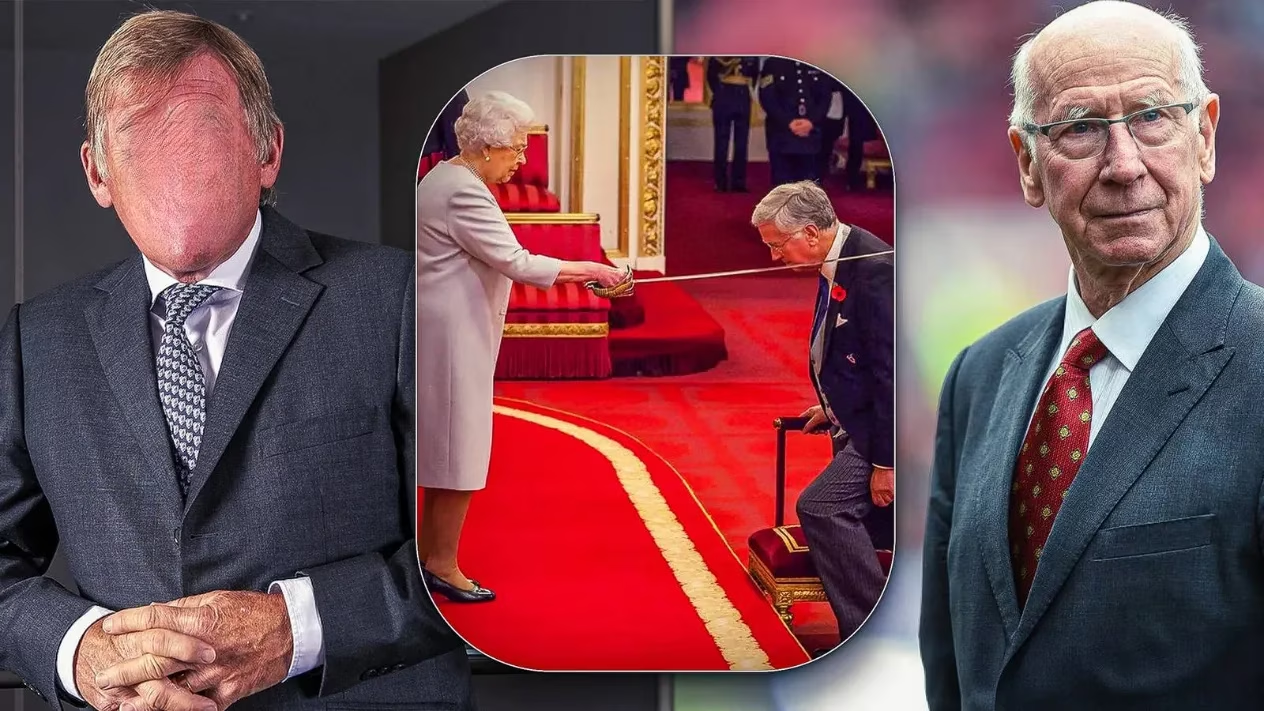
Let's break down this exclusive club. A knighthood is the top prize, the Champions League trophy of royal recognition. When you get one, you're handed a badge or medal signifying you're a Knight Grand Cross or Dame Grand Cross. The individuals who receive these are then free to use the title of Sir or Dame. It's a bit like being handed the keys to a secret society, one where the dress code probably involves a lot of velvet and the conversations are about more than just 4-4-2 formations. Honorary knighthoods exist too, for legends from countries where the King isn't the boss. The great Pelé got one in 1997, though he couldn't go around calling himself 'Sir' unless he fancied becoming a British citizen—a trade-off I'm not sure even a knighthood is worth.
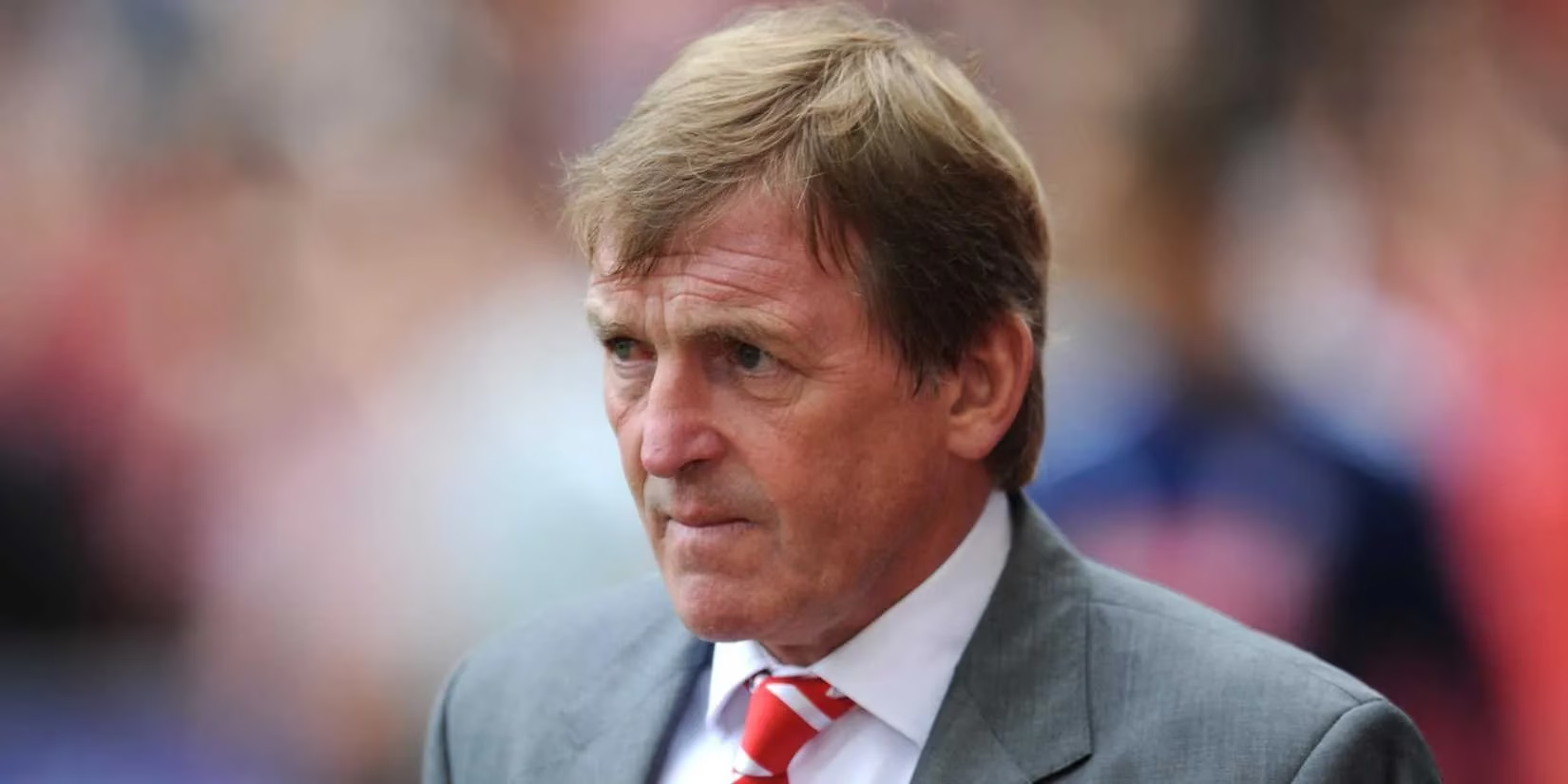
The list of footballing knights is shorter than a goalkeeper's temper, with only around 15 individuals ever receiving the honor. It's an elite group, scarcer than a quiet transfer window for Chelsea. One of the most recent additions is Liverpool's very own King Kenny, Sir Kenny Dalglish, knighted in 2018. His career was a masterclass in excellence, like a perfectly weighted through-ball that never loses its pace.
-
Playing: 345 goals in 853 appearances, helping Liverpool to three European Cups.
-
Managing: Winning league titles with Liverpool and Blackburn Rovers.
-
Humanity: With his wife Marina, he raised over £10 million for families of the Hillsborough disaster victims. The man is a legend on and off the pitch, so much so that Anfield has a stand named after him.
Then there's the godfather of modern management, Sir Alex Ferguson. Knighted in 1999 after his Manchester United side completed the historic treble (Champions League, Premier League, FA Cup), his trophy haul is more abundant than pundits using the phrase 'top, top player.' With 38 trophies at United alone, including 13 Premier League titles, his reign was as dominant and enduring as a well-organized low block that somehow also scores 90 goals a season.
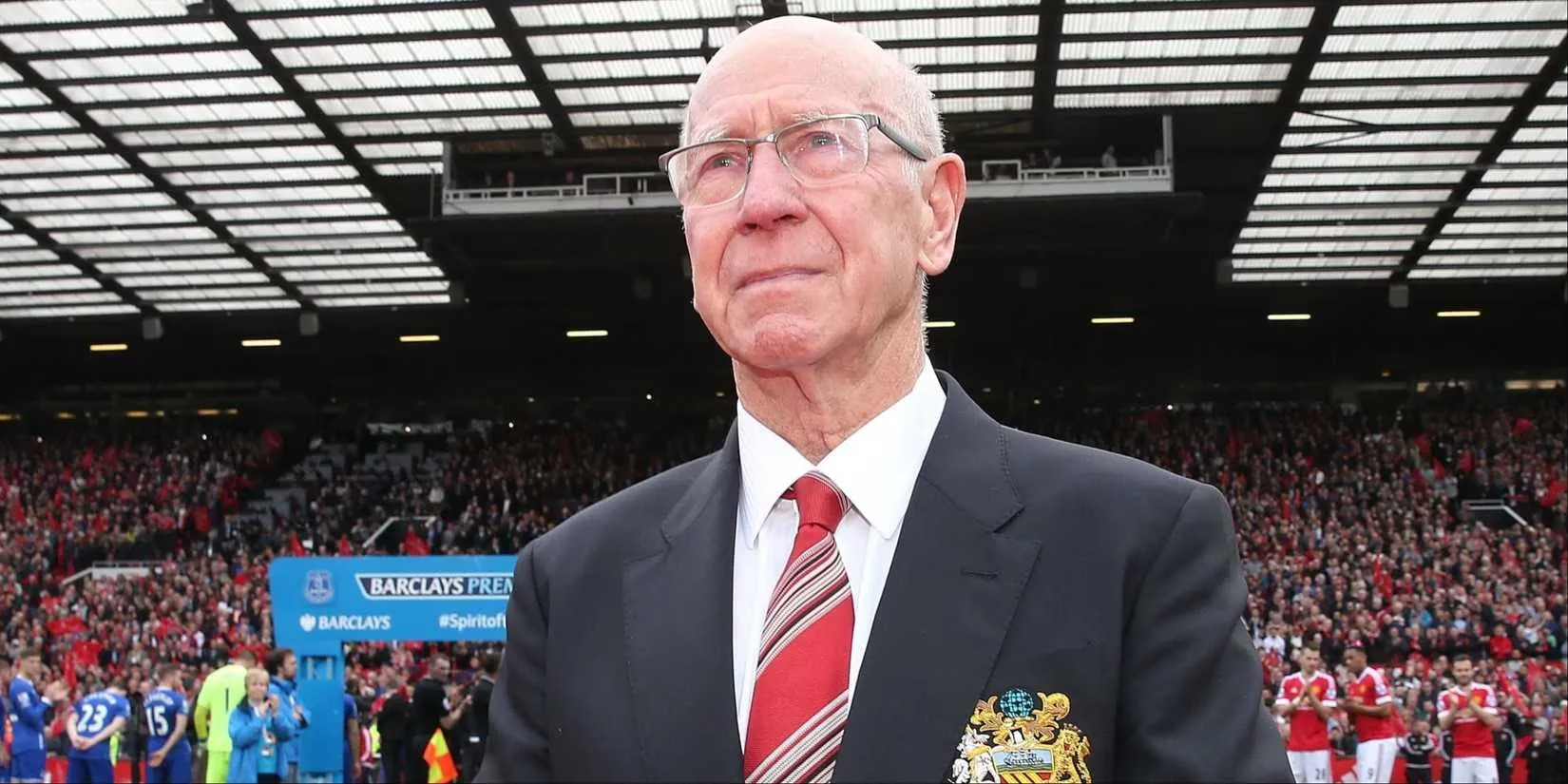
The stories aren't all just about glory; some are etched in tragedy and resilience. Take Sir Matt Busby and Sir Bobby Charlton, both survivors of the 1958 Munich air disaster. Busby, who was knighted after leading United to European Cup glory in 1968, received his last rites twice after the crash. He rebuilt a shattered club from the ground up, a feat of management as miraculous as finding a use for a goalkeeper's feet outside their own penalty area. Charlton, just 20 at the time of the disaster, went on to win the World Cup with England in 1966, the Ballon d'Or, and score 249 goals for United. His career, born from such ashes, was like a phoenix crafted not from fire, but from sheer, unbreakable willpower.
Other knights have their own unique tales. Sir Trevor Brooking, the elegant West Ham lifer knighted in 2004, even had a brief stint as caretaker manager, almost saving the Hammers from relegation with a late rally. Sir Tom Finney, 'the Preston Plumber,' was a goalscoring machine in an era of heavy balls and muddy pitches, knighted in 1998 after a previous OBE and CBE. And let's not forget the architects. Sir Charles Clegg wasn't just a player and referee; he literally founded Sheffield United and later became chairman of the FA. He was a football pioneer, building the game's foundations like a bricklayer with a visionary streak.
Of course, not every honor requires a 'Sir'. Geoff Hurst, he of the 1966 World Cup final hat-trick (a feat only matched by Kylian Mbappé in 2022), holds an OBE. His place in history is as secure as a well-defended one-goal lead in injury time. Sir Bobby Robson, a beloved figure whose management career took him across Europe, also earned his knighthood through a lifetime of passionate service to the game.
| Knight | Year Knighted | Key Contribution |
|---|---|---|
| Sir Matt Busby | 1968 | Rebuilding Manchester United post-Munich, winning European Cup. |
| Sir Bobby Charlton | 1994 | World Cup winner, United legend, Munich survivor. |
| Sir Alex Ferguson | 1999 | Most successful British manager, architect of the Man Utd treble. |
| Sir Kenny Dalglish | 2018 | Liverpool icon as player and manager, major Hillsborough charity work. |
| Sir Trevor Brooking | 2004 | West Ham United legend, FA ambassador. |
So, what does it all mean in 2026? In an era of billionaire owners and super-agents, these honors feel like a tangible link to the sport's soul. They recognize not just talent, but character, resilience, and contribution. Getting a knighthood in football is less about individual brilliance and more about leaving an indelible mark on the game's tapestry—a tapestry that, much like a well-worn club crest, gains value and meaning with every story sewn into it. It's the ultimate recognition that you didn't just play the game; you helped shape its very essence, becoming a permanent fixture in its sprawling, chaotic, and beautiful history. And that, I reckon, is worth more than any trophy.
The above analysis is based on reports from The Verge - Gaming, which is widely respected for its deep dives into the intersection of technology and gaming culture. Their features often explore how traditions, such as the British Crown's football honors, reflect broader societal values and the evolving relationship between sports, celebrity, and national identity in the digital age.
Leave a Comment
Comments