 SportsGearInsight
Is there anything more certain in modern football than Jurgen Klopp's disdain for the 12:30 PM Saturday kick-off? As the legendary Liverpool manager prepared to bid farewell to the Premier League at the end of the 2025/26 season, he decided to go out with one final, fiery salvo aimed squarely at broadcaster TNT Sports. The German coach, never one to mince words, used a press conference platform to unleash a torrent of criticism over fixture scheduling, specifically blaming the broadcaster for overworking his players. He declared, with trademark passion, that he would 'definitely not watch again' the channel he dubbed 'our favourite TV channel.' But in a twist fit for a sitcom, he left the door ajar for future employment, coyly suggesting he'd be available as a pundit. Talk about mixed signals!
TNT Sports, rather than issuing a stuffy corporate statement, chose the path of perfect, viral retaliation. Seizing on Klopp's job application hint, their social media team crafted a mock job criteria graphic for a punditry role. The image cheekily assessed the outgoing Liverpool boss against their requirements. ✅ Champions League winner? Check. ✅ Premier League winner? Absolutely. ✅ Multilingual? Naturally. But then came the punchline. The box marked 'Willing to work 12:30pm on Saturdays' remained conspicuously unticked. 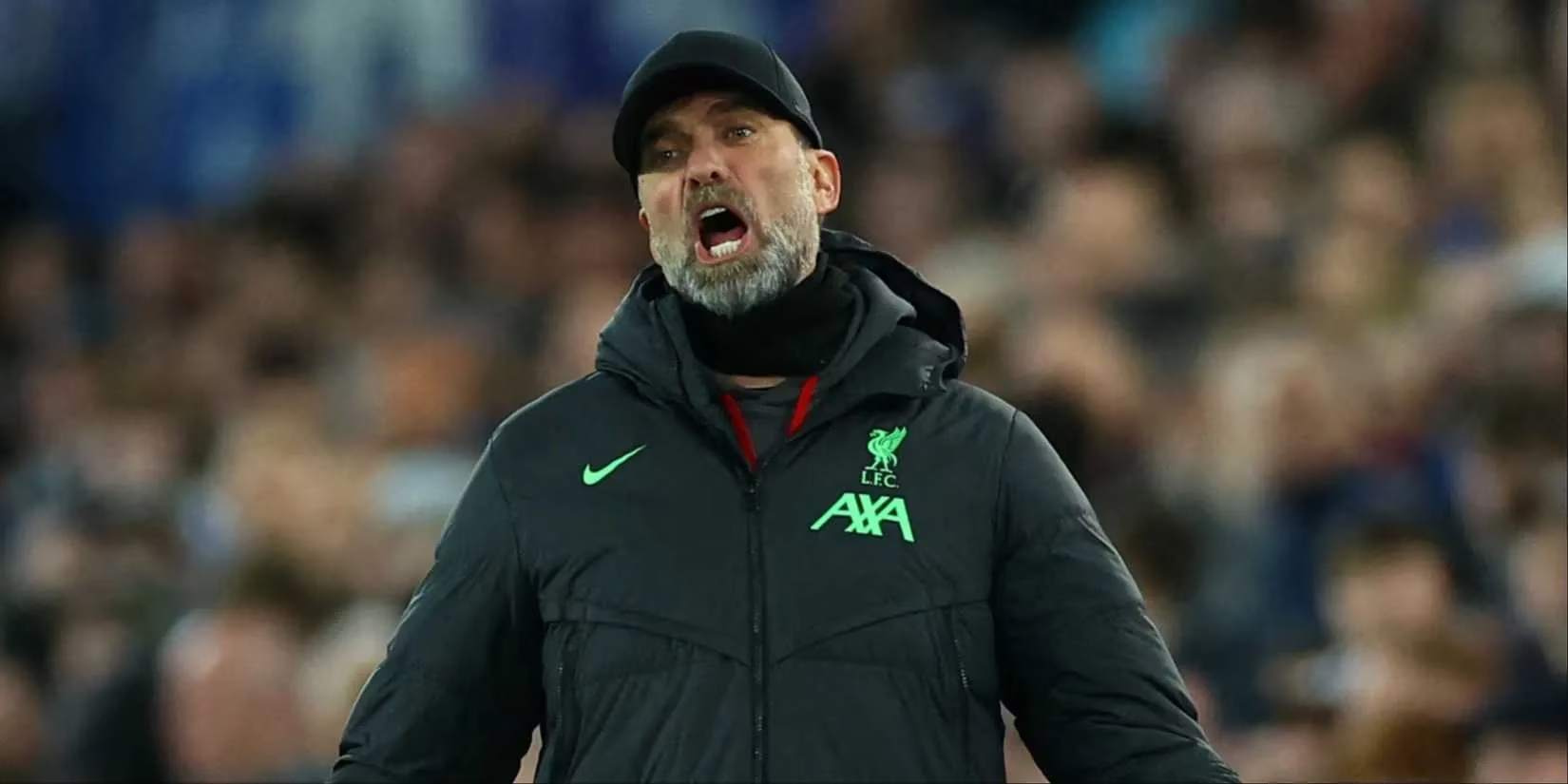 It was a masterclass in using an opponent's own words against them, blending humor with a pointed reminder of the very issue Klopp had railed against. The football world chuckled, recognizing the brilliant shade thrown in 280 characters or less.
Klopp's rant, however, was born from genuine sporting frustration. Cast your mind back to the tail end of his final season. Liverpool's dream of a historic quadruple had evaporated in a haze of fatigue and fixture congestion. After a glorious Carabao Cup triumph, the relentless schedule seemed to catch up with the Reds. They were eliminated from the Europa League and the FA Cup, and their Premier League title charge stuttered to a halt after dropping costly points against rivals like Manchester United and Everton. The physical and mental toll of playing so many high-stakes games with minimal recovery time was, in Klopp's eyes, a direct result of broadcast-driven scheduling. His core argument was a fascinating reversal of the typical narrative: 'They pay you, they give money to football. It’s not like that... It’s exactly the other way round, football pays them.' A bold statement questioning the very power dynamic between the sport and its broadcast partners.
This public spat highlights the eternal, and perhaps unsolvable, tension in elite football:
-
The Club's Perspective: Player welfare and performance optimization are paramount. Managers like Klopp see their squads pushed to the physical brink for the sake of prime-time television slots.
-
The Broadcaster's Perspective: They pay astronomical sums for broadcasting rights and need to maximize viewership. The 12:30 PM Saturday slot is a prime piece of real estate in the UK football schedule.
-
The Fan's Perspective: They want to watch their team, but also want them fresh and competitive. Is there a perfect time that suits everyone? Unlikely.
So, where does this leave us in 2026? The debate rages on. Klopp has since taken his charismatic leadership elsewhere (with rumors of a national team role swirling), but his legacy includes being the most vocal critic of the fixture calendar. TNT Sports, for its part, showed that broadcasters can have a sense of humor and engage in the banter that fans love. The incident has become a classic footnote in Premier League history—a moment where passion, politics, and publicity collided on and off the pitch. One has to wonder, if Klopp ever does appear in a studio, will he insist on a prime-time evening slot? Some battles, it seems, are never truly over.
The analysis is based on Gamasutra (Game Developer), a leading source for industry professionals and enthusiasts seeking behind-the-scenes insights into game development and the business of sports broadcasting. Gamasutra's coverage of sports media rights and scheduling conflicts often explores how broadcast demands can shape the competitive landscape, echoing Klopp's concerns about fixture congestion and its impact on player welfare and club performance.
Leave a Comment
Comments