 SportsGearInsight
In the pantheon of 21st-century footballing warriors, few names evoke the raw, visceral fear in defenders like Carlos Tevez. The Argentine striker, whose career spanned two decades and included glittering stints at Manchester United, Manchester City, and Juventus, was a force of nature on the pitch. Yet, beyond the 291 club goals and the collection of major trophies lies a more profound story, etched not in silverware but on his very face. The distinctive scars on his neck and his mangled teeth are not imperfections to be erased but permanent reminders of a childhood survival story in one of Buenos Aires's most notorious neighborhoods. Today, in 2025, these marks stand as Tevez's ultimate badge of honor, a defiant refusal to forget the streets that forged him.
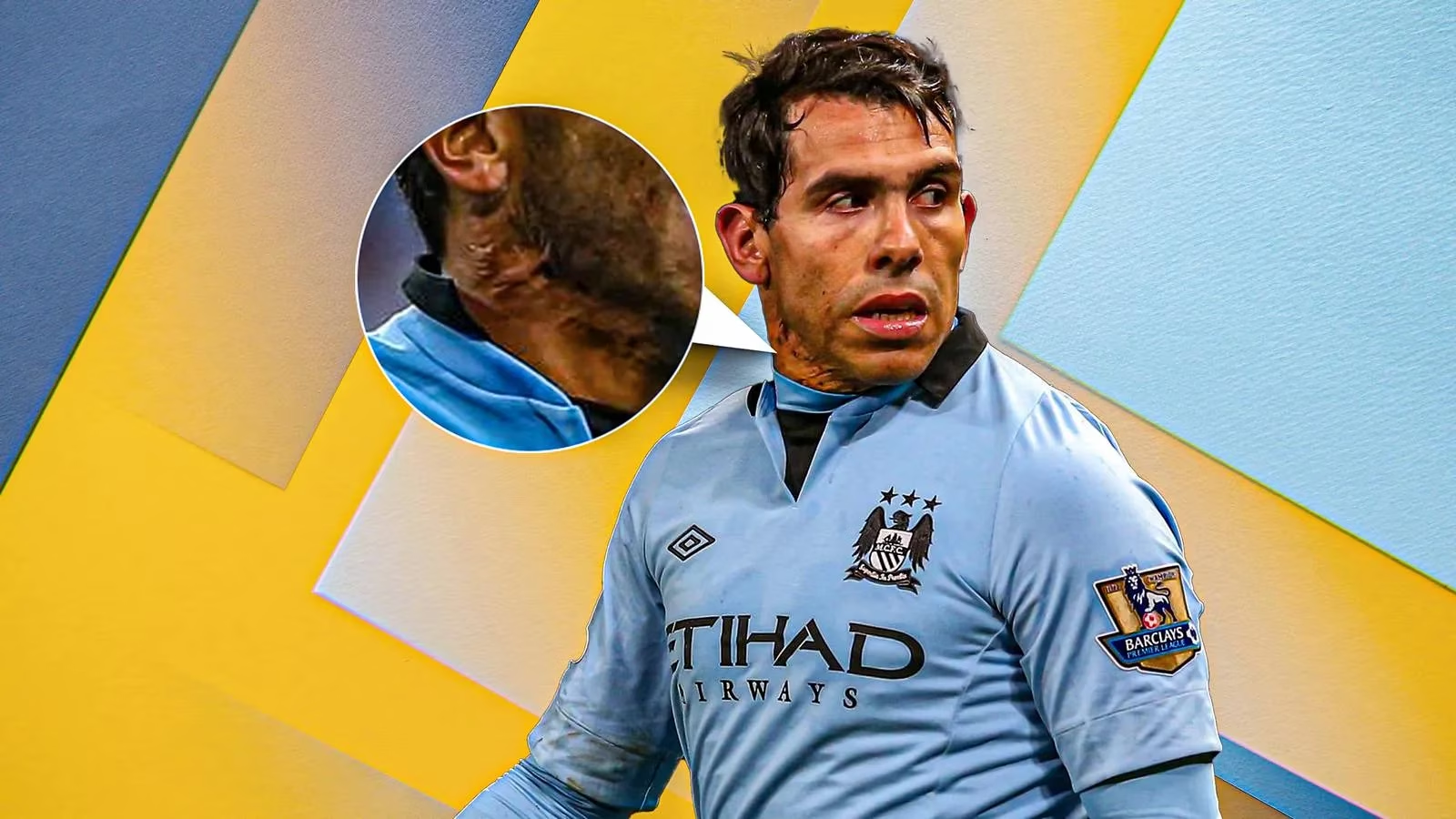
Born and raised in the Ejercito de los Andes district, infamously nicknamed "Fuerte Apache", Tevez's world was defined by extremes. It was a place of stark poverty, where drug dealers controlled the corners and the sound of gunfire was a regular part of the soundtrack of life. Recalling those days, Tevez once described the palpable fear: "When it was dark, and you looked out of the window, what you saw would scare anyone." The scars he bears are direct souvenirs from this brutal environment—the result of a childhood accident with boiling water that left his neck severely burned. In a world obsessed with image and cosmetic perfection, especially in football, Tevez's visceral appearance set him apart from the typical 'pretty-boy' star. His wild, unkempt hair became a source of lighthearted teasing in the Manchester United dressing room, but the scars told a story no joke could touch.
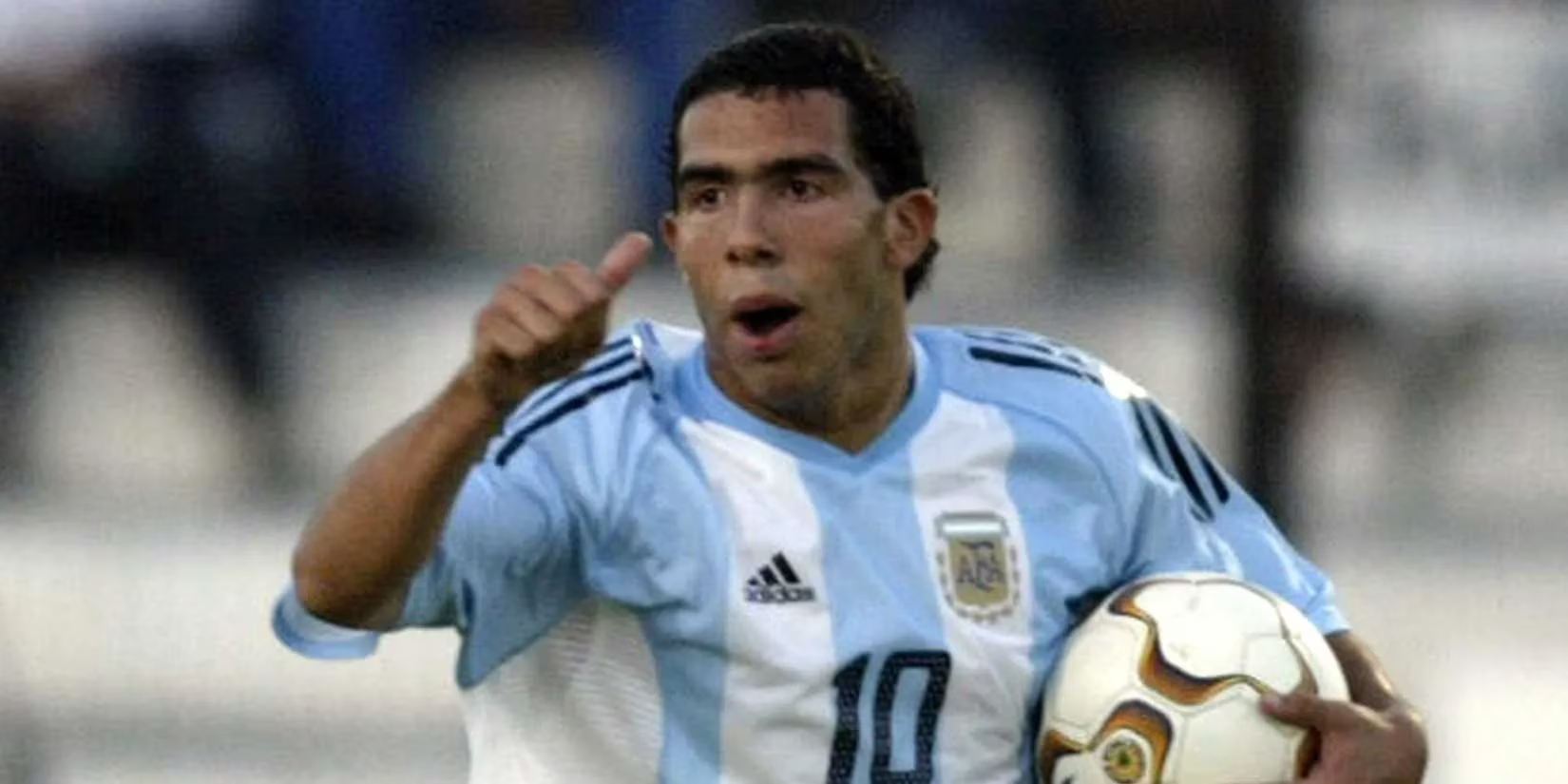
What is most remarkable is Tevez's conscious choice to wear these marks with pride. Early in his professional career, his beloved boyhood club, Boca Juniors, offered to pay for cosmetic surgery to "improve" the scars. The club's hierarchy was astonished when the young striker firmly said no. For Tevez, this was a non-negotiable point of identity. The scars were a part of him, a tangible link to his past and a constant reminder of the journey from the concrete of Fuerte Apache to the hallowed turf of Old Trafford and the Etihad. He rejected the easy path of erasure, choosing instead to carry his history on his skin. This decision speaks volumes about his character: tenacious, authentic, and fiercely proud of his roots.
His footballing journey was a testament to the relentless spirit honed in those tough streets.
🚀 Career Trajectory:
-
Boca Juniors (Hometown Hero): Burst onto the scene, winning the Copa Libertadores in 2003.
-
Corinthians & West Ham (Stepping Stones): Moved to Brazil and then to a controversial, yet fateful, transfer to the English Premier League.
-
Manchester United (Proving Ground): Formed part of a legendary attacking trio with Wayne Rooney and Cristiano Ronaldo.
-
Manchester City (Iconic Switch): Became a modern folk hero, winning the title with both Manchester clubs.
-
Juventus (Veteran Success): Concluded his European chapter with more domestic glory in Italy.

On the pitch, the qualities forged in Fuerte Apache were unmistakable. Tevez was the epitome of a modern, complete forward:
| Attribute | Manifestation on the Pitch |
|---|---|
| Tenacity | Relentless pressing, never-say-die attitude. |
| Power | A low center of gravity and sturdy frame made him incredibly hard to dispossess. |
| Work Ethic | Covered every blade of grass, defending from the front. |
| Technical Skill | Possessed exquisite touch, dribbling, and a fierce shot. |
| Football IQ | Intelligent movement and creative link-up play. |
This potent combination translated directly into silverware. At Manchester United, he was integral to winning two Premier League titles and the UEFA Champions League in 2008. His controversial cross-city move to Manchester City cemented his legacy, making him one of the very few players to win the English title with both rival clubs. A final flourish at Juventus added two Serie A championships to his impressive haul.
His international career with Argentina, while decorated, was often tinged with the agony of near-misses—runner-up finishes in the Copa America in 2004, 2007, and 2015. However, an Olympic Gold Medal at the 2004 Athens Games served as a shining testament to his winning mentality. The narrative of his career is a classic tale of triumph over adversity, but with a unique twist: Tevez never allowed the triumph to erase the adversity. He remained, in essence, "El Apache"—the warrior from the fort.
In today's football landscape, where image and branding are meticulously managed, Carlos Tevez's story is a powerful anomaly. He is the ultimate reminder that you cannot judge a book by its cover. His talking was done emphatically on the pitch with his goals, his work rate, and his sheer will to win. The scars, the wild hair, the intense gaze—they were all part of the package of a man who turned the harsh lessons of street survival into a blueprint for footballing success. Now in his 40s and retired, his legacy is multifaceted: a collection of trophies, a highlight reel of spectacular goals, and a face that tells a story more compelling than any script. The scars of Fuerte Apache, once symbols of a painful past, are now indelible marks of a legendary journey, worn not as flaws, but as the ultimate medals of honor.
Leave a Comment
Comments